


Jodi Arias became one of the most recognizable figures in American true crime history after the murder of Travis Alexander in 2008. Her case attracted worldwide attention because of its disturbing details, dramatic courtroom testimony, and extensive media coverage. Millions of people followed every stage of the trial, making it one of the most watched criminal proceedings in modern American history.
The story combined romance, obsession, deception, and violence, creating a case that continues to fascinate people years later. Although Jodi Arias was ultimately convicted and sentenced to life in prison, debates surrounding her motives and psychological state still exist today. Understanding her life requires examining her upbringing, relationships, and the events that led to one of America’s most infamous murder convictions.
Jodi Arias Biography Table
| Field | Details |
|---|---|
| Full Name | Jodi Ann Arias |
| Known As | Jodi Arias |
| Date of Birth | July 9, 1980 |
| Age (2026) | 45 years old |
| Birthplace | Salinas, California, United States |
| Nationality | American |
| Ethnicity | Mixed (Mexican-American and European ancestry) |
| Zodiac Sign | Cancer |
| Religion (Formerly) | Converted to The Church of Jesus Christ of Latter-day Saints (Mormonism) in 2006 |
| Current Religious Status | Not publicly disclosed |
| Parents | William Angelo Arias (father) and Sandra Allen Arias (mother) |
| Siblings | Four siblings |
| Education | Attended Yreka Union High School; later earned a GED equivalent after leaving school |
| Profession (Before Arrest) | Sales Representative, Waitress, Photographer |
| Known For | Conviction for the 2008 murder of Travis Alexander |
| Employer | Pre-Paid Legal Services (now LegalShield) |
| Relationship Status | Single |
| Ex-Boyfriend | Travis Victor Alexander (1977–2008) |
| Date of Meeting Travis Alexander | September 2006 |
| Place of Meeting | Las Vegas, Nevada, United States |
| Crime Committed | First-degree murder of Travis Alexander |
| Date of Crime | June 4, 2008 |
| Crime Location | Mesa, Arizona, United States |
| Arrest Date | July 15, 2008 |
| Arrest Location | Yreka, California, United States |
| Trial Start Date | January 2, 2013 |
| Verdict Date | May 8, 2013 |
| Verdict | Guilty of First-Degree Murder |
| Sentence Date | April 13, 2015 |
| Sentence | Life imprisonment without the possibility of parole |
| Prison Location | Arizona State Prison Complex, Perryville, Arizona (Arizona Department of Corrections) |
| Current Status (2026) | Serving a life sentence without parole |
| Height | Approximately 5 feet 4 inches (163 cm) |
| Hair Color | Brown |
| Eye Color | Brown |
| Hobbies (Before Arrest) | Photography, traveling, art, reading, and journaling |
| Media Coverage | One of the most widely televised true-crime trials in U.S. history |
| Notable Documentaries | Jodi Arias: Dirty Little Secret, Jodi Arias: An American Murder Mystery, and multiple true-crime specials |
| Appeal Outcome | Conviction and life sentence upheld by Arizona Court of Appeals in 2020 |
| Net Worth | Not publicly known; no verified net worth available |
Early Life of Jodi Arias
Jodi Ann Arias was born on July 9, 1980, in Salinas, California. She grew up in a middle-class family with four siblings and experienced what appeared to be a relatively normal childhood. However, years later, she described her upbringing as difficult and claimed she experienced emotional and physical abuse, though these allegations were disputed by family members. During her school years, she was often described as quiet, artistic, and intelligent. She developed a strong interest in photography and creative arts, skills that would later become unexpectedly significant in the criminal investigation. Despite her talents, she struggled academically and eventually left high school before earning her diploma through alternative means.
Family Background and Childhood Experiences
The family environment of Jodi Arias became a topic of public discussion during her trial. Her parents, William Angelo Arias and Sandra Allen Arias, largely remained out of the spotlight while their daughter faced legal proceedings. Arias testified that her childhood involved strict parenting and episodes of abuse, which her defense team used to explain her emotional vulnerabilities. However, relatives disputed many of her claims, creating conflicting narratives. Experts involved in the trial suggested that early family dynamics may have influenced her emotional development. While these experiences cannot excuse criminal actions, psychologists often examine childhood environments to better understand behavioral patterns that emerge later in life.
Jodi Arias Before Meeting Travis Alexander
Before her relationship with Travis Alexander, Jodi Arias held various jobs, including positions in restaurants and sales. She eventually became involved with Pre-Paid Legal Services, a multi-level marketing company that expanded her professional network. Colleagues described her as charismatic, friendly, and highly ambitious. She enjoyed photography, traveling, and socializing with coworkers. At this stage, her life appeared ordinary, and there were no major signs that she would become involved in one of America’s most shocking criminal cases. Friends often viewed her as polite and engaging, although some later recalled signs of intense emotional attachment in her relationships.
How Jodi Arias Met Travis Alexander
Jodi Arias met Travis Alexander in September 2006 at a business conference in Las Vegas, Nevada. Alexander was a successful salesman and motivational speaker associated with the same company. Their connection developed quickly, and they began a long-distance relationship. Alexander lived in Mesa, Arizona, while Arias remained in California. Friends described their early romance as exciting and passionate. They shared interests in religion, business, and personal development. However, beneath the surface, their relationship was becoming increasingly complicated. What started as a promising partnership eventually transformed into a turbulent and emotionally exhausting dynamic.
The Complicated Relationship Between Jodi Arias and Travis Alexander
The relationship between Jodi Arias and Travis Alexander was characterized by intense emotional highs and lows. They officially broke up several times but continued seeing each other intermittently. Their communication included thousands of text messages, emails, and phone calls. Friends noticed patterns of jealousy, possessiveness, and emotional instability. Alexander reportedly attempted to distance himself from Arias multiple times while still maintaining contact. This inconsistency created confusion and resentment. Their relationship eventually evolved into a toxic cycle that neither person fully escaped. Many investigators later believed these unresolved tensions played a major role in the tragic outcome.
Jodi Arias and Her Conversion to Mormonism
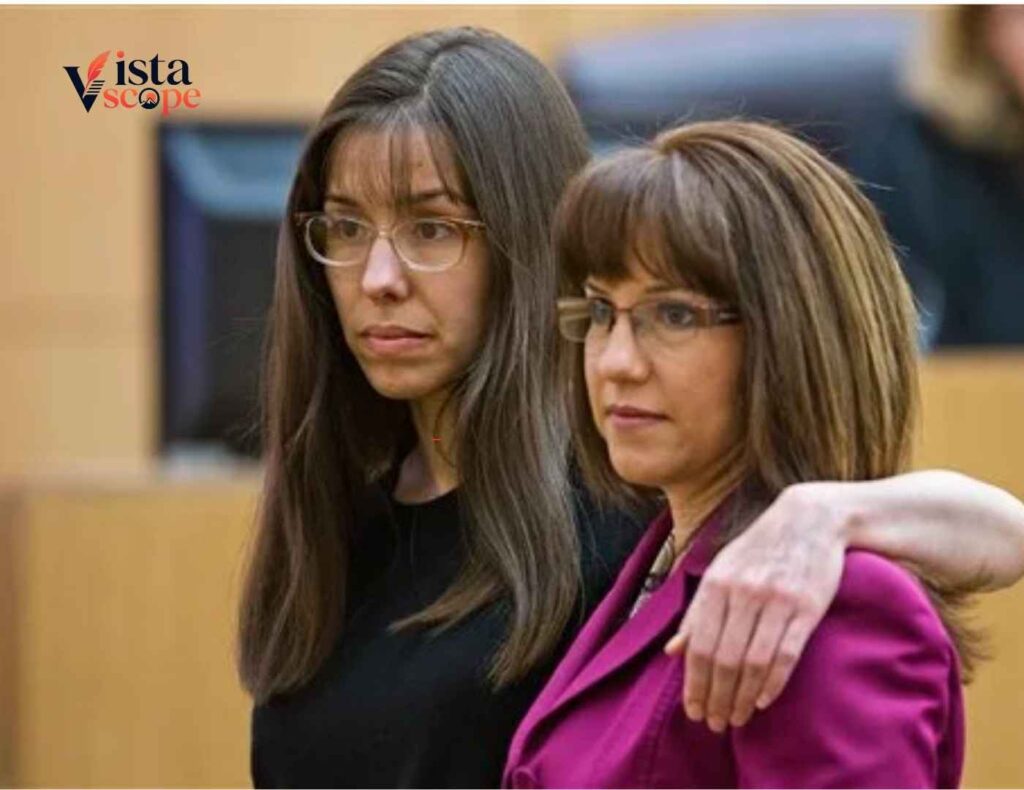
An important aspect of Jodi Arias’ life was her conversion to The Church of Jesus Christ of Latter-day Saints. Influenced by Travis Alexander, she joined the church in 2006. She adopted many religious practices and appeared committed to her new faith. Friends said she embraced church teachings enthusiastically and attempted to align her life with its values. However, her relationship with Alexander often conflicted with those principles. Their private lives reportedly included behavior inconsistent with church expectations. This contradiction became a significant topic during the trial and highlighted the complexity of their relationship.
Signs of Obsession and Possessive Behavior
As their relationship deteriorated, concerns about Jodi Arias’ behavior intensified. Friends of Travis Alexander described incidents involving jealousy, constant communication, and boundary violations. There were allegations that she accessed his social media accounts and monitored his interactions with other women. Some witnesses characterized her behavior as obsessive. Arias denied many accusations, but prosecutors later argued that her actions demonstrated escalating fixation. These warning signs became central to the prosecution’s argument that the eventual murder was premeditated rather than spontaneous. The case raised broader discussions about unhealthy relationship patterns and emotional dependency.
The Events Leading Up to June 4, 2008
The days before June 4, 2008, revealed a series of unusual decisions by Jodi Arias. She rented a vehicle, purchased fuel containers, and traveled hundreds of miles toward Arizona. Investigators later argued these actions suggested planning. During this period, Travis Alexander was preparing for a trip to Mexico with another woman. Prosecutors believed this development intensified Arias’ jealousy. Although Arias maintained that she intended a casual visit, evidence suggested a deliberate effort to conceal her travel route. These actions would later become important pieces of evidence presented during the trial.
The Murder of Travis Alexander
On June 4, 2008, Travis Alexander was murdered inside his home in Mesa, Arizona. He suffered numerous stab wounds, a gunshot wound to the head, and a severe throat injury. The brutality of the crime shocked investigators and the public alike. His body remained undiscovered for several days until friends visited his home. Authorities immediately recognized the violent nature of the attack. Investigators quickly identified Jodi Arias as a person of interest due to her close relationship with Alexander and inconsistencies in her statements. The crime scene revealed evidence that would eventually become critical in securing her conviction.
The Camera Evidence That Changed Everything
One of the most significant breakthroughs in the investigation involved a damaged digital camera discovered at the crime scene. Investigators recovered deleted photographs showing Travis Alexander alive shortly before his death. Additional images documented events during the attack itself. This evidence dramatically altered the direction of the case and contradicted several of Arias’ explanations. The photographs established a timeline and placed her directly at the scene. Many legal experts consider this digital evidence one of the most important pieces of forensic evidence in modern criminal investigations. It eliminated many opportunities for reasonable doubt.
Jodi Arias’ Changing Stories
Following the murder, Jodi Arias provided multiple explanations. Initially, she denied being in Arizona and claimed she had not seen Travis Alexander. Later, she said masked intruders committed the crime. Eventually, she admitted killing him but argued it was an act of self-defense. These changing narratives damaged her credibility significantly. Prosecutors emphasized these contradictions throughout the trial. Each new version created additional questions about her honesty. Jurors ultimately concluded that her evolving stories indicated attempts to avoid responsibility rather than truthful recollections of events.
The Jodi Arias Trial That Captivated America
The trial began in January 2013 and quickly became a media phenomenon. Millions watched live courtroom broadcasts every day. The proceedings lasted several months and featured extensive testimony about intimate details of the relationship. Legal experts, journalists, and viewers closely analyzed every statement. Social media discussions exploded as people debated Arias’ behavior and credibility. The case became one of the most talked-about criminal trials of the decade. Its combination of drama, graphic evidence, and emotional testimony transformed it into a cultural event beyond a typical murder case.
Defense Strategy and Self-Defense Claims
The defense team argued that Jodi Arias acted in self-defense after suffering abuse from Travis Alexander. Attorneys presented testimony describing him as controlling and emotionally harmful. Arias herself spent 18 days on the witness stand explaining her version of events. However, prosecutors challenged these claims aggressively. They argued that evidence overwhelmingly supported premeditation rather than self-defense. Jurors ultimately rejected Arias’ account. The defense strategy highlighted how complex abusive relationships can become, but it failed to persuade the jury that her actions were legally justified.
Verdict and Conviction
On May 8, 2013, Jodi Arias was found guilty of first-degree murder. Jurors concluded that the killing was deliberate and premeditated. The verdict represented a major victory for prosecutors after years of investigation and preparation. Following the conviction, separate proceedings determined her punishment. Multiple juries failed to unanimously decide whether she should receive the death penalty. As a result, the final sentencing decision fell to the judge. The case remained in headlines throughout this extended legal process and continued attracting enormous public interest.
Jodi Arias Sentencing and Life in Prison
In April 2015, Judge Sherry Stephens sentenced Jodi Arias to life in prison without the possibility of parole. The sentence ended years of legal uncertainty and ensured she would remain incarcerated for the rest of her life. Family members of Travis Alexander delivered emotional victim impact statements before sentencing. Arias apologized for the pain she caused but maintained aspects of her previous testimony. The judge determined that parole eligibility was inappropriate given the severity of the crime. Today, she remains imprisoned in Arizona.
Appeals and Legal Challenges
After sentencing, Jodi Arias pursued several appeals. Her legal team argued that media attention and prosecutorial misconduct compromised her right to a fair trial. However, appellate courts rejected these arguments. In 2020, the Arizona Court of Appeals upheld both her conviction and life sentence. Judges concluded that evidence overwhelmingly supported premeditated murder despite procedural concerns raised by the defense. This decision reinforced the original verdict and significantly limited future legal options available to Arias.
Where Is Jodi Arias Today?
As of 2026, Jodi Arias remains incarcerated in an Arizona state prison, serving a life sentence without the possibility of parole. She occasionally attracts media attention due to artwork and prison activities, but she no longer maintains the public visibility she once had during her trial years. Because her sentence excludes parole eligibility, she is expected to spend the remainder of her life behind bars unless extraordinary legal circumstances emerge in the future. There have been no successful appeals overturning her conviction.
Media Legacy and Cultural Impact
The Jodi Arias case permanently changed how true crime stories are consumed. Continuous live broadcasts, social media debates, documentaries, and podcasts transformed the trial into a global phenomenon. It demonstrated the growing influence of digital media in shaping public perceptions of criminal cases. Universities, legal experts, and psychologists still analyze the proceedings today. The case also highlighted ethical concerns regarding extensive media exposure and its potential influence on justice. Years later, it remains a defining example of modern true crime culture.
Conclusion
The story of Jodi Arias is ultimately a cautionary tale about obsession, emotional instability, and the devastating consequences of toxic relationships. What began as a promising romance ended in unimaginable violence and lifelong imprisonment. While public fascination continues, the true tragedy remains the loss of Travis Alexander’s life and the pain experienced by his family and loved ones. The case also serves as an important reminder about recognizing unhealthy relationship patterns before they escalate into dangerous situations. More than a decade later, the lessons from this case continue to resonate, ensuring that this chapter of American criminal history will not be forgotten.
Frequently Asked Questions (FAQs)
1. Who is Jodi Arias?
Jodi Arias is an American woman convicted of the 2008 first-degree murder of her former boyfriend, Travis Alexander, in Mesa, Arizona.
2. How old is Jodi Arias?
She was born on July 9, 1980, making her 45 years old in 2026.
3. Why did Jodi Arias kill Travis Alexander?
Prosecutors argued that jealousy, obsession, and anger over their deteriorating relationship motivated the murder. Arias claimed she acted in self-defense.
4. Is Jodi Arias still in prison?
Yes. She remains incarcerated in an Arizona prison and is serving a life sentence without parole.
5. Did Jodi Arias receive the death penalty?
No. After juries could not unanimously agree on a death sentence, a judge sentenced her to life in prison without parole.
6. What evidence convicted Jodi Arias?
Key evidence included digital camera photographs, DNA evidence, phone records, and contradictions in her statements.
7. Where is Jodi Arias today?
As of 2026, she remains imprisoned in Arizona and is expected to spend the rest of her life there unless future legal developments occur.
